Master your own bodyweight.
From a first push-up to the planche. Structured progressions that build genuine control — not shortcuts that cost you your elbows two years later.
Skills are built, not attempted
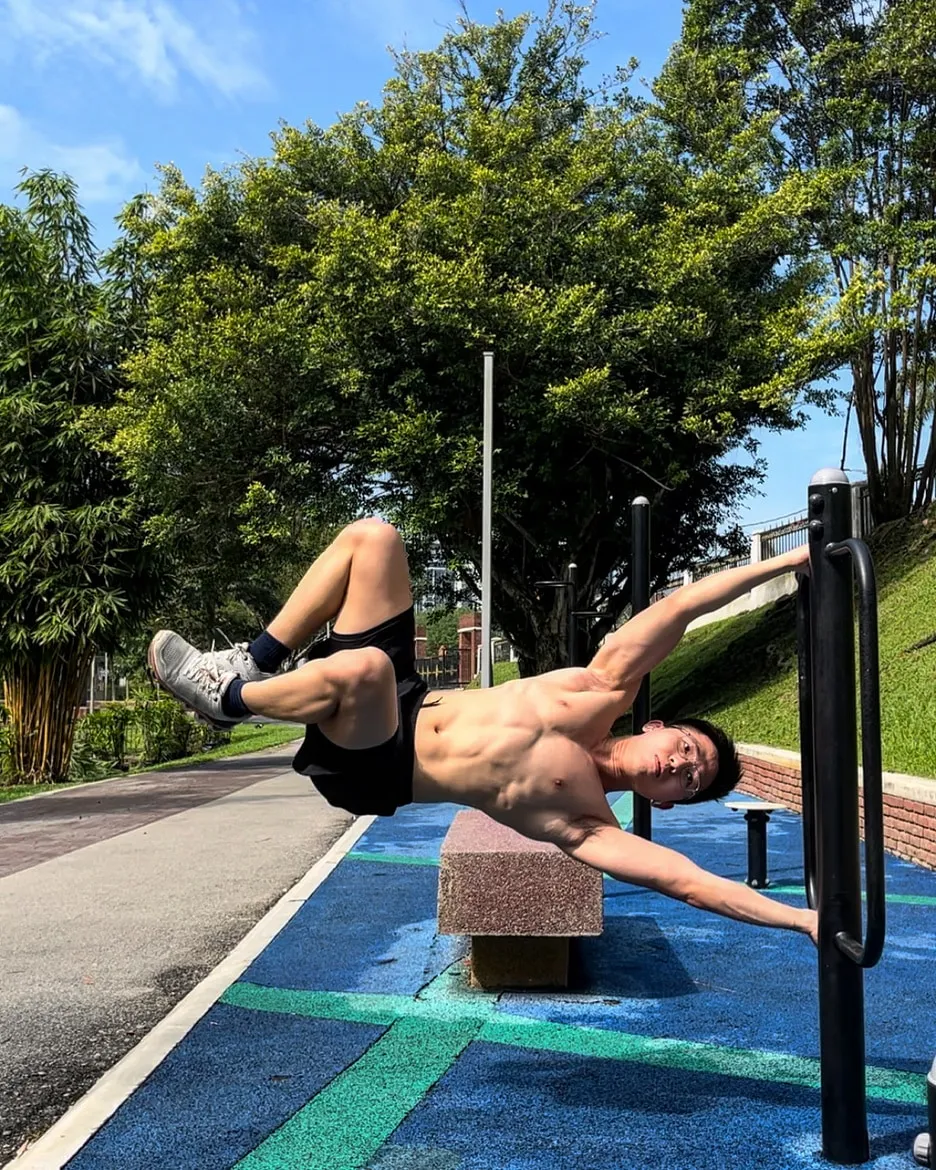
I started calisthenics in 2014 for the same reason most people do — I wanted to know what strong felt like. What I learned is that the people who get the skills are the ones who respect the steps.
Almost everyone who stalls on planche or front lever has the same problem: they are attempting the final position instead of owning the one before it. So we work backwards from your goal skill, find the strongest progression you can hold with clean form, and build from there.
Skills I coach
- Handstand — wall work, balance drills, then freestanding control.
- Planche — lean progressions, tuck to straddle, with the wrist and shoulder prep that keeps it sustainable.
- Front lever — scapular strength first, then tuck, advanced tuck, straddle, full.
- Muscle-up — bar and rings, built from strict pull strength rather than kipping your way there.
- Foundations — first push-up, first pull-up, first dip. The least glamorous and most valuable work I do.
Joints first
Calisthenics has an injury problem, and it is almost entirely self-inflicted through rushing. Tendons adapt more slowly than muscle, so every programme I write includes preparation work for the wrists, elbows and shoulders. It is slower in month one and considerably faster across year one.
Calisthenics questions
I cannot do a single pull-up. Is that a problem?
Not remotely — it is the most common starting point I see. Ring rows, negatives and scapular work build a first pull-up faster than most people expect, usually inside a few months of consistent training.
How long does a handstand take?
A wall-supported handstand hold comes quickly. A controlled freestanding handstand typically takes six months to two years depending on how often you practise. It is a skill, so frequency matters more than intensity.
Is calisthenics enough on its own, or do I need weights?
For most goals bodyweight alone will take you a very long way. I still add loaded work — it is the fastest route to certain strength qualities, and it makes the harder skills safer to attempt.
Will I get injured training planche and front lever?
Not if the progressions are honest. Elbow and shoulder injuries in calisthenics almost always come from skipping steps. We build connective tissue tolerance alongside the strength, which is slower but it is the reason my clients keep training.
Can calisthenics help me lose weight?
It builds strength and muscle very effectively, and that supports fat loss — but nutrition drives body composition far more than any training style. I cover both.
Do you coach calisthenics online?
Yes. Skill work suits video review particularly well, because the fixes are usually positional and easy to see on film.
Explore the coaching
HYROX coaching
Race-specific prep for the eight runs and eight stations, built around your race date.
Read more →Online coaching
Programming, video form checks and weekly adjustments from anywhere.
Read more →PT in Kota Damansara
In-person one-to-one sessions for clients around PJ, Damansara and KL.
Read more →Which skill are
you chasing?
Tell me the skill you want and where you are now. I'll map out the progressions and roughly how long it should take.
First message is free and there's no obligation — most people just tell me their goal and we go from there.